

How Footfall AI Is Transforming Retail Store Performance in 2026
Learn how Footfall AI is transforming retail store performance in 2026 through AI-powered traffic analytics, customer behavior insights, conversion tracking, and operational optimization.
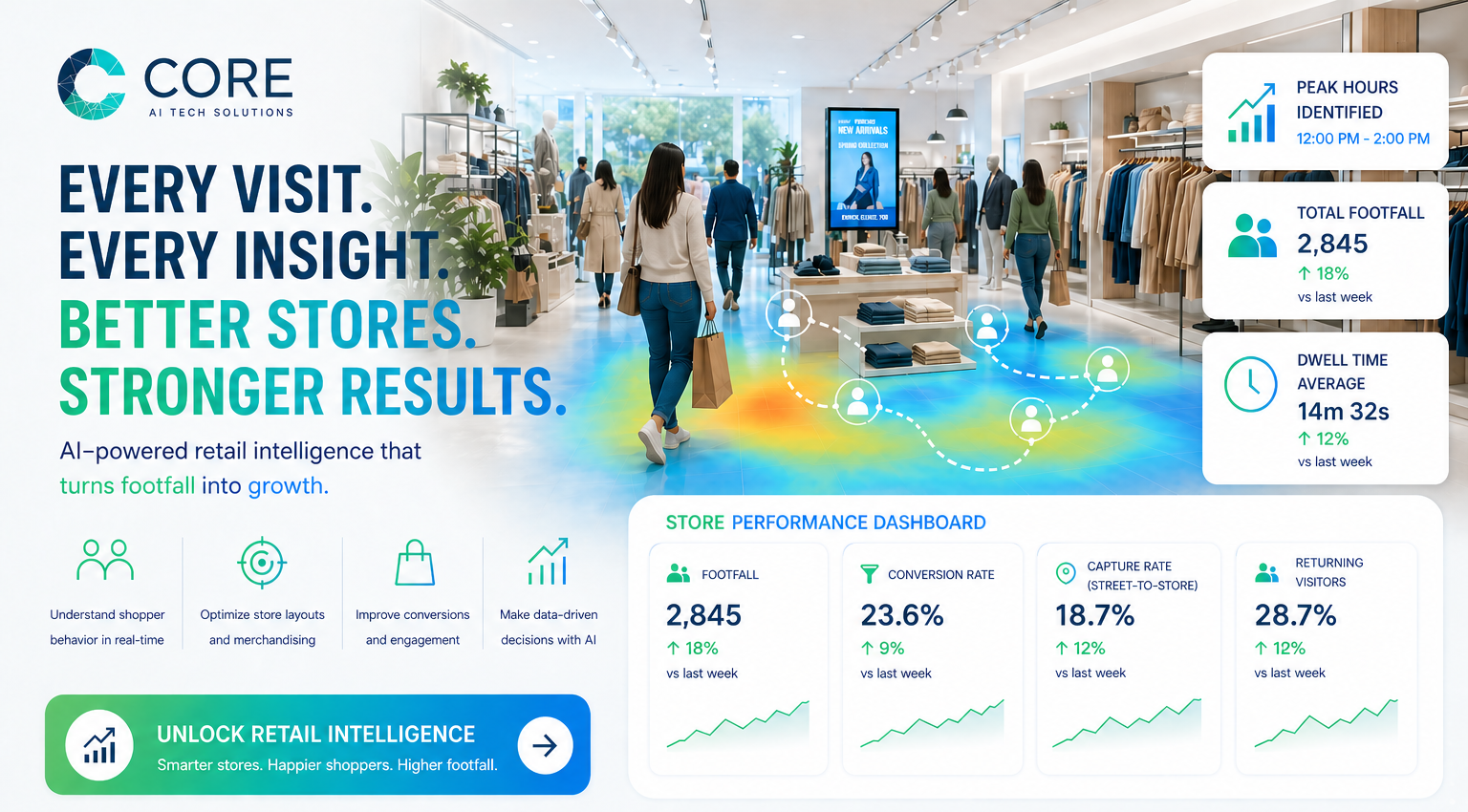
The retail industry is undergoing a major transformation in 2026. As customer expectations continue to evolve and competition becomes increasingly intense, retailers can no longer rely solely on sales reports and manual observations to understand store performance. Today's leading retailers are turning to Artificial Intelligence (AI) to gain deeper insights into customer behavior, optimize operations, and maximize profitability.
One of the most impactful innovations driving this shift is Footfall AI—an intelligent analytics solution that measures, analyzes, and predicts customer traffic patterns in physical retail environments.
From shopping malls and supermarkets to fashion retailers and specialty stores, Footfall AI is helping businesses make smarter, data-driven decisions that directly improve revenue and operational efficiency.
What Is Footfall AI?
Footfall AI is an advanced analytics technology that uses AI-powered video analytics, computer vision, and sensor-based data collection to monitor and analyze customer movement within physical spaces.
Unlike traditional people-counting systems, Footfall AI goes beyond simply measuring the number of visitors entering a store. It provides actionable insights such as:
Customer traffic volume
Peak shopping hours
Visitor demographics
Dwell time analysis
Customer journey mapping
Queue management insights
Store zone performance
Conversion rate tracking
By transforming raw visitor data into meaningful business intelligence, retailers gain a comprehensive understanding of how customers interact with their stores.
Why Retailers Need Footfall AI in 2026
Retail success is no longer determined by foot traffic alone. Businesses must understand the quality of traffic, customer intent, and in-store engagement.
Footfall AI enables retailers to answer critical questions such as:
How many visitors enter the store daily?
Which store sections attract the most attention?
What are the busiest shopping periods?
How effective are marketing campaigns at driving store visits?
How many visitors actually make a purchase?
Where are operational bottlenecks occurring?
These insights empower management teams to make faster and more informed decisions.
Key Ways Footfall AI Is Transforming Retail Performance
1. Improving Customer Experience
Customer experience remains one of the strongest drivers of retail success.
Footfall AI helps retailers identify:
Congested store areas
Long waiting times
Underutilized spaces
Customer flow inefficiencies
By understanding how shoppers move throughout the store, retailers can redesign layouts, optimize product placement, and create a more seamless shopping journey.
The result is improved customer satisfaction and higher conversion rates.
2. Increasing Store Conversion Rates
Many retailers focus on sales figures without understanding how effectively they convert visitors into buyers.
Footfall AI enables retailers to measure:
Store Conversion Rate = Number of Purchases ÷ Number of Visitors
This allows businesses to:
Compare performance across branches
Evaluate promotional campaigns
Identify underperforming locations
Improve sales strategies
Stores can quickly identify whether low sales are caused by insufficient traffic or poor conversion performance.
3. Optimizing Staffing and Labor Costs
Labor costs remain one of the largest operational expenses for retailers.
Footfall AI provides detailed traffic forecasts that help management:
Schedule staff during peak hours
Reduce overstaffing during slow periods
Improve employee productivity
Enhance customer service coverage
This data-driven workforce planning leads to better customer experiences while reducing unnecessary labor expenses.
4. Enhancing Store Layout and Merchandising
Understanding where customers spend their time is critical for maximizing revenue.
Footfall AI heatmaps reveal:
High-traffic zones
Low-engagement areas
Product interaction patterns
Customer movement paths
Retailers can use these insights to:
Optimize shelf placement
Improve promotional displays
Increase exposure for high-margin products
Redesign ineffective store layouts
Small layout adjustments often lead to significant increases in sales performance.
5. Measuring Marketing ROI More Accurately
One of the biggest challenges in retail marketing is linking advertising spend to actual store visits.
Footfall AI bridges this gap by measuring:
Campaign-driven store traffic
Visit uplift during promotions
Location-specific marketing effectiveness
Customer visitation trends
Retailers can finally understand which campaigns generate real-world traffic and revenue rather than relying solely on online engagement metrics.
6. Predicting Future Demand Through AI
Modern Footfall AI platforms use predictive analytics to forecast customer traffic patterns.
By analyzing historical trends, seasonal factors, weather conditions, and promotional activities, AI can predict:
Future visitor volumes
Peak shopping periods
Staffing requirements
Inventory demand
This proactive approach enables retailers to prepare resources before demand surges occur.
7. Supporting Multi-Branch Retail Operations
For retailers operating multiple locations, consistency and visibility are essential.
Footfall AI provides centralized dashboards that allow management to:
Compare branch performance
Benchmark conversion rates
Monitor visitor trends
Identify top-performing locations
Standardize operational best practices
This enterprise-level visibility enables smarter expansion and investment decisions.
Industries Benefiting from Footfall AI
Footfall AI is transforming a wide range of industries, including:
Shopping Malls
Visitor traffic analysis
Tenant performance measurement
Event effectiveness tracking
Supermarkets and Grocery Stores
Queue optimization
Peak-hour management
Store layout improvements
Fashion Retail
Customer journey tracking
Product engagement analysis
Conversion optimization
Consumer Electronics
Demonstration zone analytics
Product interaction measurement
Sales funnel improvement
Restaurants and Cafés
Customer flow monitoring
Seating utilization analysis
Service efficiency tracking
Banks and Service Centers
Queue management
Customer service optimization
Branch performance measurement
Privacy-Compliant AI Analytics
Modern Footfall AI solutions are designed with privacy and compliance in mind.
Many platforms operate using anonymized analytics that do not store personally identifiable information (PII). Businesses can gain valuable operational insights while maintaining compliance with data privacy regulations, including:
Data Privacy Act of 2012 (Republic Act No. 10173) in the Philippines
GDPR in Europe
Other global privacy frameworks
This ensures responsible AI deployment while protecting customer trust.
The Future of Retail Is Data-Driven
In 2026, successful retailers are no longer relying on intuition alone. They are leveraging AI-powered insights to understand customer behavior, optimize store operations, and improve profitability.
Footfall AI transforms physical stores into intelligent retail environments by converting customer traffic data into actionable business decisions.
Organizations that embrace Footfall AI today gain a competitive advantage through improved customer experiences, higher conversion rates, smarter staffing decisions, and stronger operational performance.
As retail continues to evolve, Footfall AI is becoming an essential technology for businesses seeking sustainable growth in an increasingly data-driven world.
Ready to Transform Your Retail Performance?
Discover how Footfall AI can help your business measure visitor traffic, improve conversion rates, optimize operations, and unlock valuable customer insights.
Contact our team today to learn how AI-powered retail analytics can drive smarter decisions and stronger business results.

“Powering real-time intelligence for business growth”
REACH US
hello@coreaitechsolutions.com
+63 9171894910
Unit 1015, Parkway Corporate Center,
Corporate Ave corner Parkway Place, Filinvest City,
Alabang, Muntinlupa City, Philippines, 1781
(C) 2026 CORE AI Tech Solutions Corporation. All rights reserved.

SOLUTIONS
AI Agents
Dashboard
Automation System
Data Workflow


